
Decision Behaviour Analysis: क्यों आप बार‑बार गलत फैसले लेते हैं – ये हैं 3 hidden वजहें (Psychology + Behavioural Numerology)
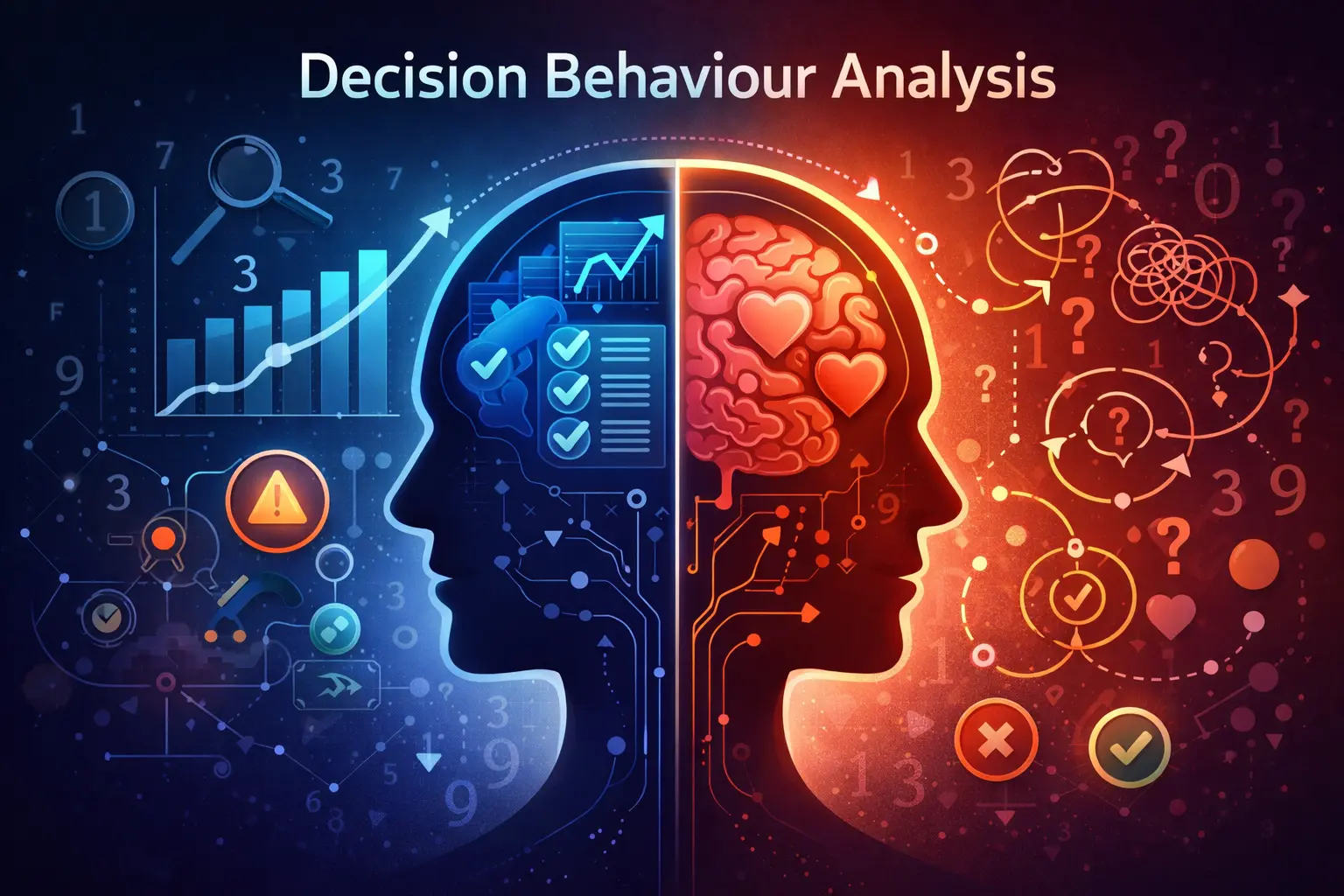
Decision Behaviour Analysis एक practical framework है जो यह बताता है कि कोई व्यक्ति decisions कैसे लेता है और बार‑बार वही गलत फैसले क्यों दोहराता है। इसमें cognitive psychology (bias, emotion), behavioural patterns और behavioural numerology (number exposure patterns) को combine करके decision-making tendencies को decode किया जाता है, ताकि उन्हें systematically improve किया जा सके।
Decision Behaviour Analysis क्या है?
Decision Behaviour Analysis सिर्फ decision-making का theory नहीं है; यह एक applied behavioural framework है जो यह decode करता है कि आपका brain real situations में कैसे operate करता है। अधिकांश लोग मानते हैं कि उनके decisions logical होते हैं, लेकिन ground reality यह है कि हर decision तीन invisible layers से बनता है — cognitive bias, emotional trigger और behavioural repetition।
Cognitive biasआपके brain को shortcuts लेने के लिए push करता है, जिससे आप incomplete या filtered information पर decision ले लेते हैं। Emotional triggers urgency, fear, guilt या excitement पैदा करते हैं, जिससे decision का timing और direction बदल जाता है। Behavioural repetition इन दोनों को combine करके एक fixed pattern बना देता है, जो धीरे-धीरे आपकी decision identity बन जाता है।
जब यह pattern stable हो जाता है, तब आप हर situation में almost same तरीके से react करते हैं — चाहे context बदल जाए, result अक्सर वही रहता है।
लोग बार-बार गलत decisions क्यों लेते हैं?
गलत decisions accidental नहीं होते; ये patterned होते हैं।
अगर कोई व्यक्ति बार-बार impulsive decisions लेता है, तो वह अचानक नहीं हो रहा — उसके पीछे consistent internal wiring होती है।
कुछ लोग हर opportunity पर jump करते हैं — उन्हें लगता है speed advantage है, लेकिन वही impulsiveness बाद में regret में बदल जाती है। दूसरी तरफ कुछ लोग इतने analysis में फंस जाते हैं कि सही मौका निकल जाता है — उन्हें लगता है कि वे “smart decision” ले रहे हैं, जबकि वे decision avoidance कर रहे होते हैं।
इसका root cause intelligence नहीं, बल्कि pattern है।
Brain naturally familiar patterns को safe मानता है, चाहे उनका outcome खराब ही क्यों न हो। इसलिए अगर आपने पहले fear-based decision लिया है, तो अगली बार भी brain वही path choose करेगा। अगर आपने excitement में commitment किया है, तो वही pattern repeat होगा।
जब तक व्यक्ति अपने pattern को identify करके consciously break नहीं करता, तब तक improvement theoretical ही रहता है — practical नहीं।
Behavioural Numerology – Missing Layer जो Psychology नहीं पकड़ पाती
Traditional psychology यह explain करती है कि decisions कैसे बनते हैं, लेकिन यह अक्सर यह नहीं बता पाती कि दो लोग same knowledge और same situation में completely different decisions क्यों लेते हैं — और वही mistakes सालों तक repeat क्यों होती हैं।
यहाँ Behavioural Numerology एक additional observational layer देती है।
यह कोई prediction system नहीं है, बल्कि pattern reinforcement model है। इसका core idea यह है कि repeated number exposure — खासकर mobile numbers जैसे daily-use identifiers — subconscious behaviour को subtly influence कर सकते हैं।
हर दिन आप अपना mobile number dozens बार indirectly interact करते हैं — calls, OTPs, notifications, forms। यह repeated exposure एक micro-imprint बनाता है।
यह effect immediate नहीं होता, लेकिन long-term repetition behaviour tendencies को amplify कर सकता है — जैसे decision speed, emotional intensity, analysis depth या confusion tendency।
इसका मतलब यह नहीं कि number behaviour control करता है; बल्कि यह existing tendency को reinforce कर सकता है — जैसे environment personality को shape करता है।
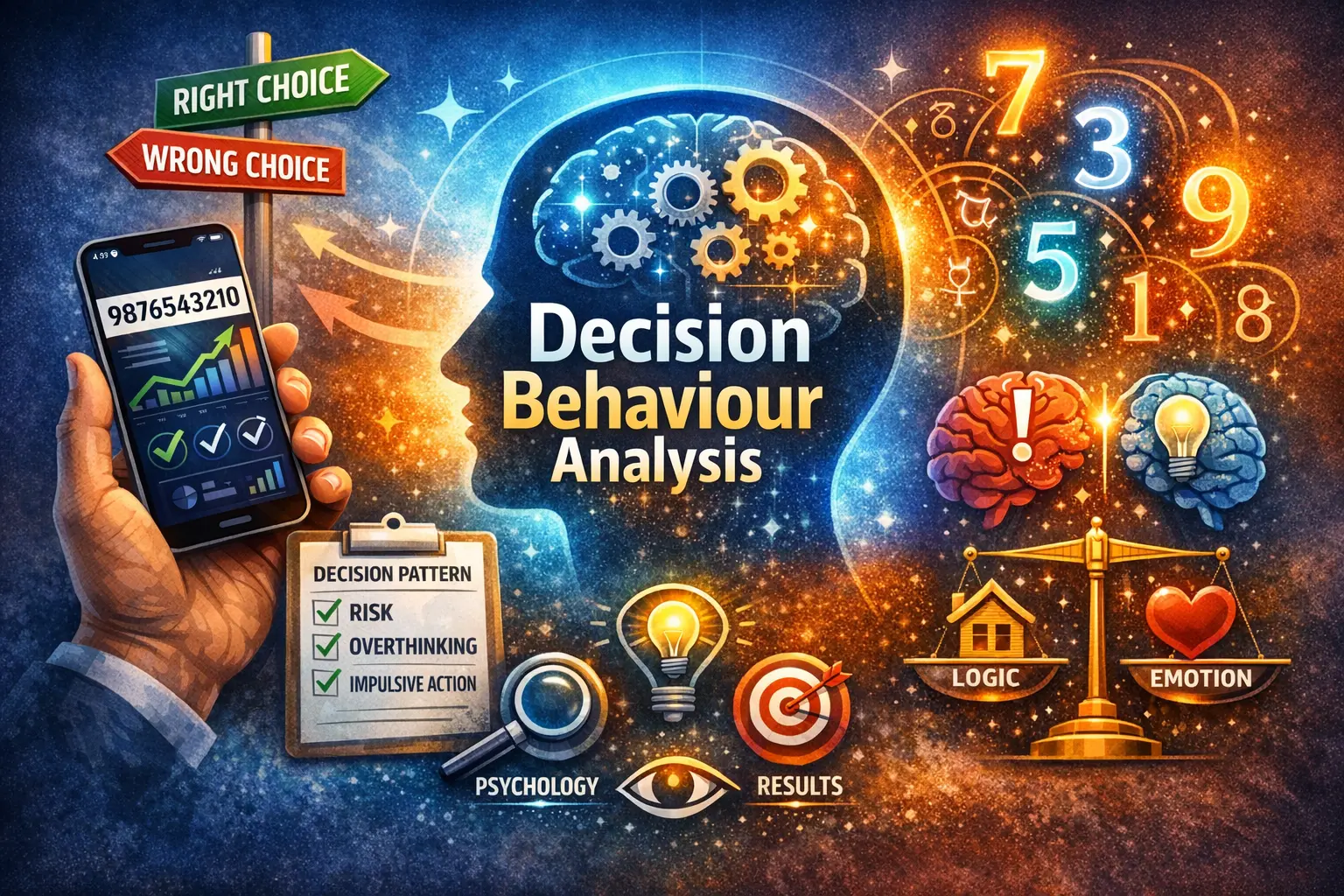
Behavioural Number Patterns और Decision Impact
यहाँ patterns personality नहीं, बल्कि decision tendencies को represent करते हैं — और ये fixed नहीं हैं, बल्कि adjustable हैं।
1 pattern में व्यक्ति fast decision maker होता है। वह initiative लेने में तेज होता है, लेकिन उसकी shadow side impulsiveness होती है — बिना पूरी जानकारी के commitment कर देना।
3 pattern creativity और possibilities को बढ़ाता है। व्यक्ति के पास ideas की कमी नहीं होती, लेकिन clarity weak हो सकती है — जिससे overthinking loop बनता है।
7 pattern deep analysis को represent करता है। यह व्यक्ति detail-oriented होता है, लेकिन यही depth decision delay और perfectionism में बदल सकती है।
9 pattern emotion-driven decision making को amplify करता है। व्यक्ति दूसरों के लिए sacrifice करने को ready रहता है, लेकिन कई बार practical नुकसान उठा लेता है।
यह समझना critical है कि ये patterns limitation नहीं हैं; ये tendencies हैं। Awareness के बाद इन्हें optimize किया जा सकता है — fast को structured, overthinking को decisive और emotion को balanced बनाया जा सकता है।
Case Studies — Pattern Reality Check
पहले case में 3 और 7 pattern dominant था। व्यक्ति हर decision को excessively analyze करता था। वह multiple options बनाता, pros-cons lists लिखता, लेकिन final decision तक नहीं पहुँच पाता था। Intervention में strict deadline और limited options rule लागू किया गया। कुछ ही हफ्तों में decision speed significantly improve हुई और execution शुरू हुआ।
दूसरे case में 1 और 9 pattern dominant था। व्यक्ति जल्दी decisions लेता था और emotional bias में commitment कर देता था। Delay rule और written reasoning technique लागू की गई। परिणाम यह हुआ कि impulsive decisions कम हुए और regret sharply गिरा।
तीसरे case में कोई clear pattern नहीं था, जिससे decision behaviour unstable था। Structured framework लागू किया गया — goal, criteria और scoring system के साथ। धीरे-धीरे clarity और confidence दोनों improve हुए।
Decision Making Psychology
Decision Behaviour Analysis को समझने के लिए psychology layer fundamental है।
Confirmation bias आपको वही information दिखाता है जो आपकी belief को support करती है। Availability heuristic recent या dramatic घटनाओं के आधार पर risk perception को distort करता है। Loss aversion आपको छोटे नुकसान के डर में बड़े opportunities छोड़ने पर मजबूर करता है।
Emotion भी equally powerful role play करता है। Fear आपको avoid करने पर मजबूर करता है, excitement आपको जल्दबाज़ी में push करता है, और social approval आपको ऐसे decisions लेने पर मजबूर करता है जो आपके लिए सही नहीं होते।
जब यही psychology layer Behavioural Numerology के साथ interact करती है, तो एक unique decision signature बनता है — जो हर व्यक्ति के लिए अलग होता है।
Decision Pattern vs Fix
| Pattern | Behaviour | Problem | Solution |
|---|---|---|---|
| Fast (1) | जल्दी निर्णय | Impulsive | Delay rule (10–30 min) |
| Overthink (3+7) | ज्यादा सोच, analysis | Decision delay | Strict deadline + 2 options |
| Emotional (9) | भावना आधारित निर्णय | Bias, regret | Written logic check |
| Confused | Clarity नहीं | Indecision | Structured framework |
PAA Section
Why do I always make wrong decisions?
आप बार‑बार गलत decisions इसलिए repeat करते हैं क्योंकि आपका brain हर बार same bias और pattern follow करता है। जब तक आप अपना decision pattern पहचानते नहीं, behaviour change practically possible नहीं होता।
Why do I overthink decisions?
Overthinking तब होता है जब analysis, action से ज्यादा powerful हो जाता है। Behavioural Numerology में यह pattern अक्सर 3 और 7 dominance के साथ दिखता है, जहाँ mind endless options बनाता रहता है लेकिन final decision नहीं लेता।
Can mobile numbers influence behaviour?
Mobile numbers directly behaviour control नहीं करते, लेकिन repeated exposure आपकी subconscious tendencies को reinforce कर सकता है। कुछ number patterns decision speed, emotion और analysis style पर subtle लेकिन consistent असर डालते हैं।
How to fix decision‑making problems?
सबसे पहले अपना pattern identify करें और फिर rule‑based correction लागू करें — fast decisions के लिए delay rule, overthinking के लिए deadline, confusion के लिए structured framework और emotional decisions के लिए logic validation। Consistent practice से ही नया decision behaviour develop होता है।
Execution Layer — Practical Improvement
Improvement awareness से नहीं, repetition से आता है।
अगर आप fast decision maker हैं, तो delay rule लागू करें।
अगर आप overthinker हैं, तो strict deadline और limited options रखें।
अगर आप emotional decisions लेते हैं, तो written logic validation जरूरी है।
अगर आप confused रहते हैं, तो structured framework अपनाएँ।
7–21 दिन की consistent practice से brain नया default behaviour adopt करना शुरू कर देता है।
आपका decision pattern क्या है? “अपना behaviour pattern analyze करें।”
FAQ
1. Decision Behaviour Analysis मेरे काम की किस तरह help कर सकता है?
Decision Behaviour Analysis आपको यह clarity देता है कि आप किस तरह के decisions में बार‑बार फँसते हैं — जैसे पैसे, career, relationships या daily habits। यह सिर्फ reason explain नहीं करता, बल्कि आपके pattern के हिसाब से simple rules सुझाता है, जैसे कब decision delay करना है, कब deadline लगानी है और कब logic check जरूरी है।
2. Behavioural Numerology और normal numerology में क्या फर्क है?
Normal numerology ज़्यादातर future prediction या luck पर focus करती है, जबकि Behavioural Numerology रोज‑मर्रा के behaviour और decision tendencies पर focus करती है। यहाँ emphasis इस बात पर होता है कि repeated number exposure आपके सोचने और react करने के तरीके को कैसे प्रभावित कर सकता है, ना कि “कल क्या होने वाला है” पर।
3. क्या सिर्फ mobile number बदलने से decisions सुधर जाते हैं?
नहीं। Mobile number change करना अकेला solution नहीं है, और कई cases में ज़रूरी भी नहीं होता। Behavioural Numerology का main काम awareness बढ़ाना है — ताकि आप समझ सकें कि आपका pattern क्या है और आप किस तरह की mistakes repeat करते हैं। Real change तब आता है जब आप awareness के साथ rules, habits और decision framework भी change करते हैं।
4. अगर मेरा decision pattern negative है तो क्या मैं ‘stuck’ हूँ?
आप permanently stuck नहीं हैं, लेकिन अगर pattern को ignore करेंगे तो वही loop चलता रहेगा। Pattern को clearly पहचानने के बाद small, repeatable actions से काम शुरू होता है — जैसे impulsive व्यक्ति के लिए हर major decision से पहले cooling‑off period, overthinker के लिए fixed time‑limit और option‑limit। धीरे‑धीरे brain नया default सीख लेता है।
5. क्या Behavioural Numerology को scientific proof की तरह मानना चाहिए?
इसे scientific proof नहीं, बल्कि behavioural lens की तरह देखना ज़्यादा honest है। यह framework psychology, observation और number patterns के mix से बना है, इसलिए इसे best way से तब use किया जाता है जब आप इसे self‑reflection और practical behaviour change के tool की तरह लें, न कि absolute truth या guarantee की तरह।
6. क्या Decision Behaviour Analysis हर किसी के लिए relevant है या सिर्फ ‘problematic’ लोगों के लिए?
यह सिर्फ उन लोगों के लिए नहीं है जो बहुत बड़ी गलती कर चुके हैं। कोई भी व्यक्ति जो बार‑बार “मैंने ऐसा क्यों किया?” सोचता है, या important decisions में clarity चाहता है, उसके लिए यह useful है। कई लोग इसे preventive tool की तरह use करते हैं, ताकि future में बड़े financial या relationship decisions लेते समय वही पुरानी गलती repeat न हो।
Numhoros Research Desk
Digital Identity • Behavioral Analysis • Numerology Awareness
Numhoros Research Desk एक independent research-based editorial team है, जो numerology को prediction या superstition के रूप में नहीं, बल्कि behavioral patterns, communication psychology और digital identity awareness के दृष्टिकोण से प्रस्तुत करता है।
यहाँ प्रकाशित सभी लेख और calculators educational उद्देश्य से तैयार किए जाते हैं, ताकि पाठक अपने व्यवहार, संवाद शैली और डिजिटल उपस्थिति को बेहतर तरीके से समझ सकें।
Numhoros पर उपलब्ध सभी calculators, लेख और analysis केवल educational और awareness उद्देश्य के लिए हैं। यह कंटेंट गणितीय गणना, belief-based interpretation और behavioral observation पर आधारित है।
Numhoros किसी भी प्रकार की भविष्यवाणी, lucky number, financial gain, health impact, relationship outcome या व्यक्तिगत सफलता की कोई गारंटी नहीं देता।
किसी भी महत्वपूर्ण निर्णय के लिए अपने विवेक, अनुभव और आवश्यकता अनुसार qualified professionals की सलाह को प्राथमिकता दें।